A simple process for launching work that performs.

Every DuckTele build moves through clear decisions, visible deliverables, testing, and launch support so the finished site is useful on day one.

The DuckTele build path.

Five practical stages keep the work moving and keep the result tied to business outcomes.
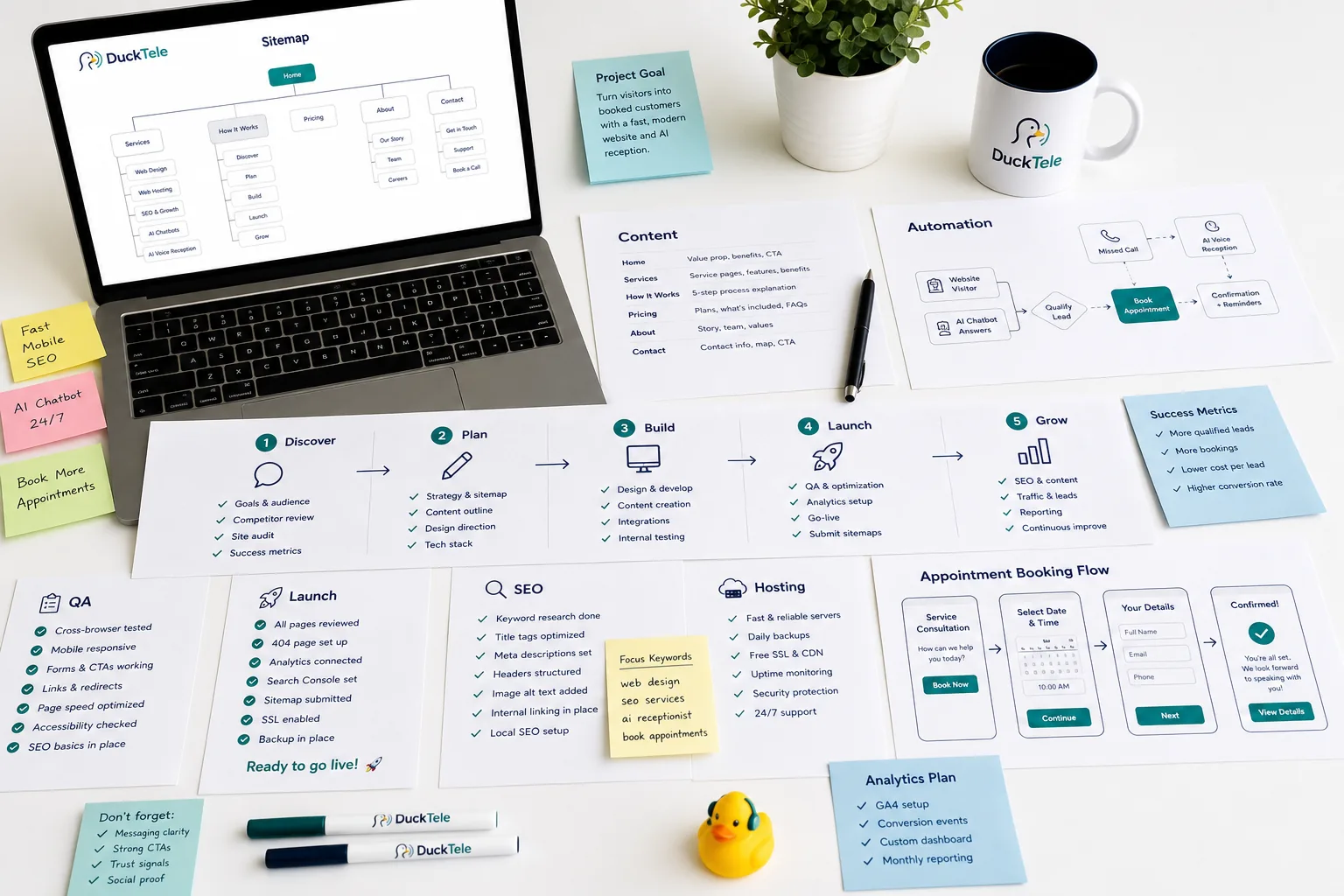
DuckTele strategy table with sitemap, content, automation, launch, SEO, hosting, and booking flow planning
Plan the work before pixels move. Sitemaps, content priorities, automations, hosting, SEO, QA, and launch timing stay visible from the start.

Clear checkpoints. Fewer surprises.

Each stage produces something useful before the next one starts, so the project keeps moving and the finished site supports the real sales path.

  • Discovery notes turn into a page map and content plan.
  • Chat, voice, forms, and booking paths are mapped before launch.
  • QA covers mobile, SSL, redirects, forms, tracking, and speed.
1

Discover

We learn your offer, audience, current website, goals, and lead flow.

2

Plan

We define the page map, content priorities, automation needs, and launch timeline.

3

Build

We design, develop, connect forms, prepare hosting, and set up the needed tools.

4

Launch

We test speed, mobile layout, links, SSL, forms, and public URLs before go-live.

5

Grow

We improve traffic, conversions, automation, and reporting after the launch.

Small enough to stay clear. Complete enough to launch cleanly.

The process is built for business owners who need decisions, action, and a finished public result without getting buried in technical noise.
  • Plain-language checkpoints before major launch choices.
  • Conversion paths checked across desktop and mobile screens.
  • Launch steps documented so the site can be supported after release.
  • Growth work connected to measurable website activity.
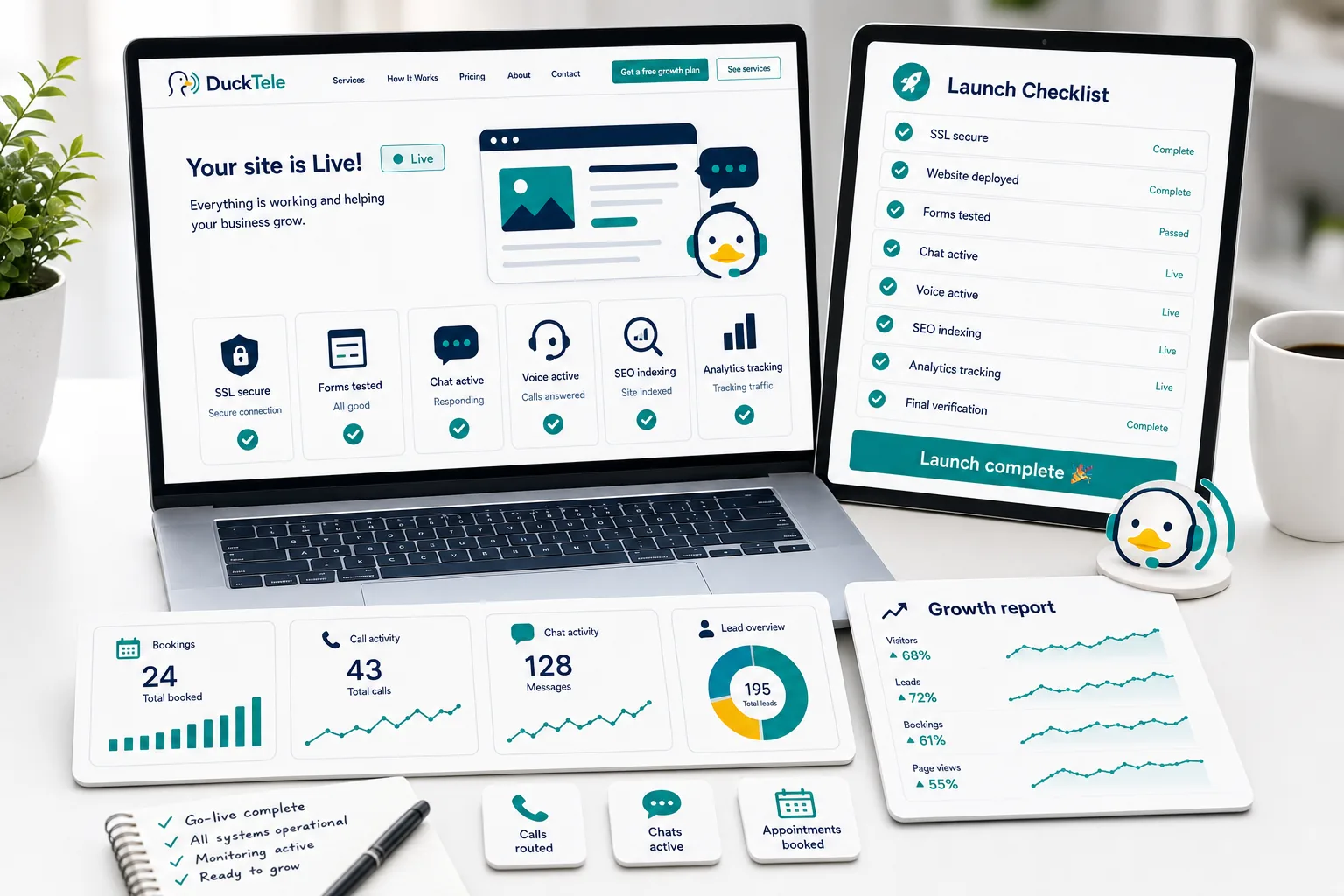
DuckTele launch checklist and growth report showing SSL, forms, chat, voice reception, SEO, analytics, bookings, calls, and chats active
Launch is checked before the page is called finished. SSL, forms, chat, voice reception, indexing, analytics, and booked appointments are reviewed as part of the go-live path.