1. Automation should protect opportunities, not hide people.
AI chat and voice reception are strongest when they capture context fast. They should reduce missed messages, after-hours gaps, and repetitive questions without trapping serious leads in a loop.
Design the automated conversation as the front of a real service process. The customer should know whether they are receiving an immediate answer, leaving information for follow-up, requesting an appointment, or moving to a person. A visible exit or escalation route is part of the experience, not an admission that the automation failed.
2. Capture the details before the handoff.
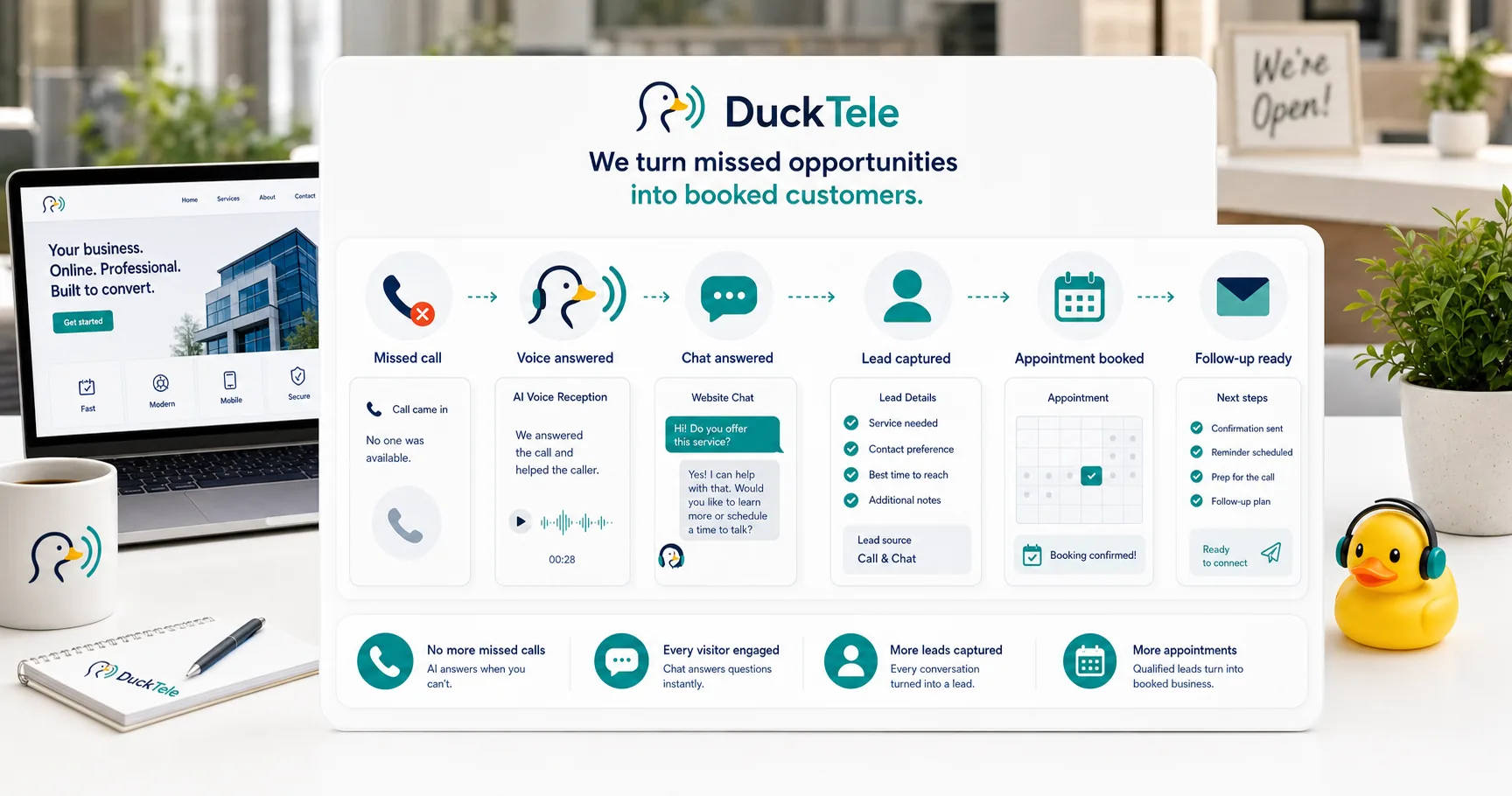
A good handoff includes name, contact preference, service needed, timeline, urgency, and any notes that help the team respond without starting over.
Collect only what the next step requires and confirm important details such as phone numbers, email addresses, dates, or service locations. The team should receive a concise summary together with the original context when appropriate. Sensitive information should stay out of general chat or voice flows unless the approved system and process are designed to handle it.
3. Route high-intent visitors quickly.
If someone wants to book, buy, schedule, or request a quote, the automation should move them toward that action instead of continuing a long conversation.
High intent can appear in several ways: a requested appointment, an urgent service need, a specific purchase question, or repeated attempts to reach the business. Define which signals trigger scheduling, a warm transfer, a priority notification, or a fast callback. If no person is available, set an honest expectation instead of implying that help is immediate.
4. Keep sensitive or unusual issues human.
Billing disputes, account-specific support, emergency situations, complaints, and detailed custom requests should move to the right person or process.
The handoff rules should also cover uncertainty. When the system lacks an approved answer, cannot understand the request, or receives conflicting details, it should stop guessing. A brief clarification, message capture, or transfer is safer and more useful than a confident but unsupported response. Emergency language should follow the business's approved policy and never create a false promise.
5. Measure what the automation actually improves.
Track calls answered, chats handled, qualified leads, booked appointments, response time, and follow-up completion. If the numbers do not improve, the handoff path needs work.
Review quality as well as volume. A high capture count is not valuable if contact details are incomplete, requests reach the wrong team, or customers repeat themselves. Sample conversations, compare them with downstream outcomes, and record the reasons for failed or abandoned handoffs. Those findings create a practical improvement queue for scripts, knowledge, routing, and staffing.
6. Make ownership explicit after the handoff.
Every transfer or captured message needs an owner, destination, and expected response window. Notifications without accountability can create the same missed-opportunity problem the automation was meant to solve. Define who receives each request type, where the record is stored, and how completion is visible.
Test the full path with realistic scenarios before launch and after material changes. Confirm that the customer receives the right message, the team receives usable context, and the record reaches the approved workflow. The strongest automation is not the longest conversation; it is the shortest reliable route to a correct answer or responsible person.